Bring Last West to You
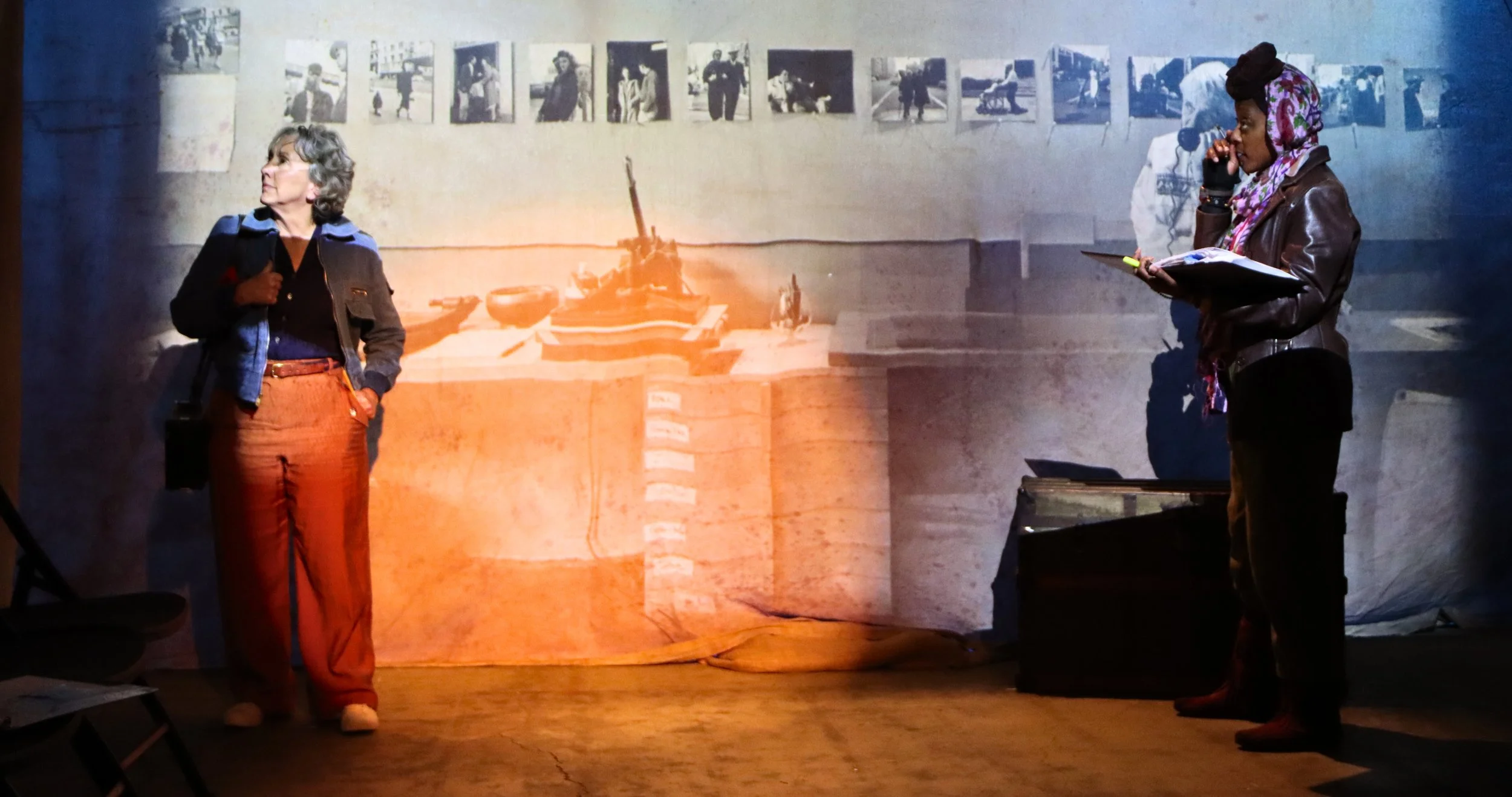
We are actively scheduling performances for 2026 and 2027 and welcome conversations with:
Black box and flexible-format theaters looking for innovative touring work with strong community relevance
Museum theaters and galleries seeking programming that bridges exhibition and performance
Universities and colleges interested in interdisciplinary public programming and student engagement
K–12 schools and educational nonprofits seeking free or subsidized performances for underserved students
We are happy to discuss co-presentations, residency models, student matinee packages, and community access programming tailored to your institution’s needs and audiences.
What LAST WEST Offers
For Theater Partners
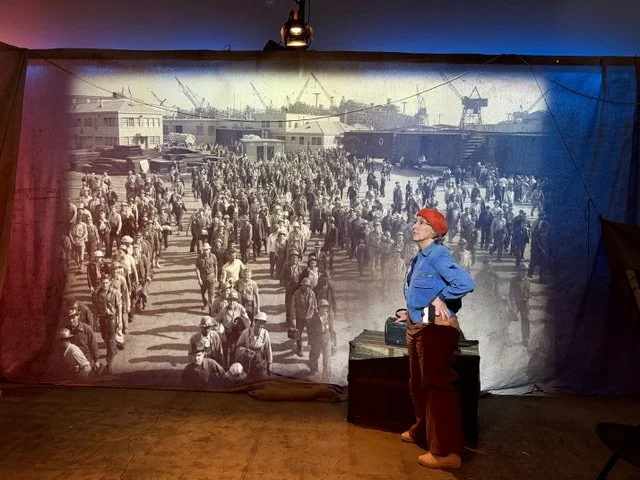
LAST WEST brings together audiences who don’t always sit together in the same room: theater subscribers and museum-goers, students and scholars, activists and arts lovers, those who know Lange’s work and those discovering it for the first time.
As a presenting partner, you receive:
A fully realized, touring-ready production with an experienced creative team
A piece with demonstrated sold-out audience demand and a 500-person waitlist from its Sonoma premiere
Built-in educational programming: post-show talkbacks, student matinees, and curriculum connections to history, photography, environmental studies, and social justice
Institutional alignment with Marin Theatre Company (2027 run) and Oakland Museum of California (2026)
A production that travels light and adapts to your space
For Museum Partners
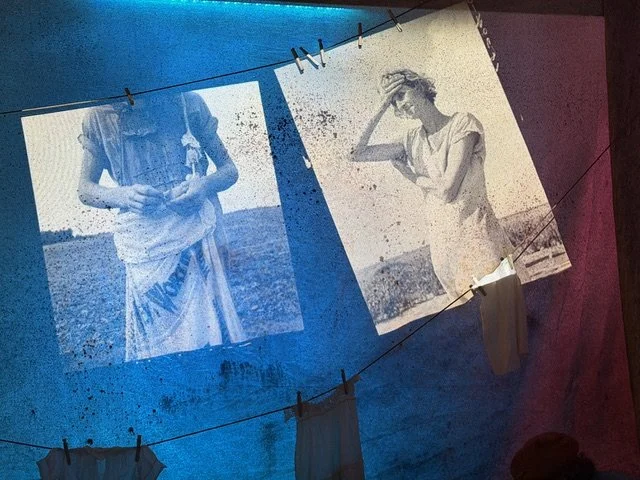
LAST WEST began in a museum archive — the Oakland Museum of California, where poet Tess Taylor first encountered Lange’s road notebooks. The piece has always understood itself as existing at the boundary between exhibition and performance.
For museum theater spaces and galleries, LAST WEST offers:
A production that functions as both theatrical event and living exhibition — the projected backdrop of hundreds of Lange photographs is itself a curatorial act
Programming that deepens engagement with existing or planned Lange collections and photography exhibitions
New audiences drawn by the theatrical experience who stay to explore the museum
Community programming potential: student days, public symposia, activist and scholar convenings
A natural companion to exhibitions on California history, the New Deal, the Depression, Japanese internment, migration, and documentary photography
For Educational Partners
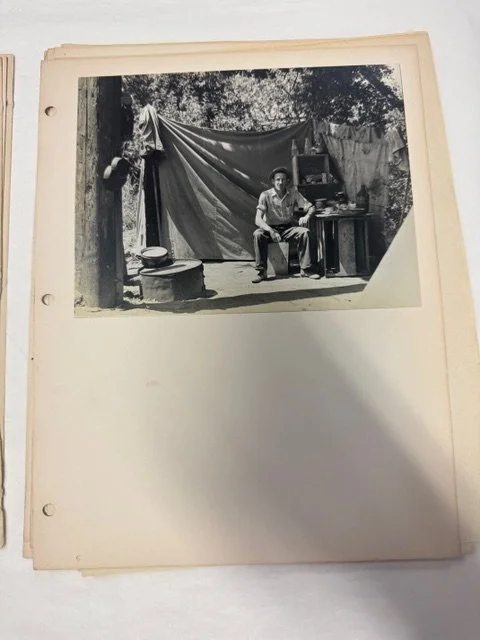
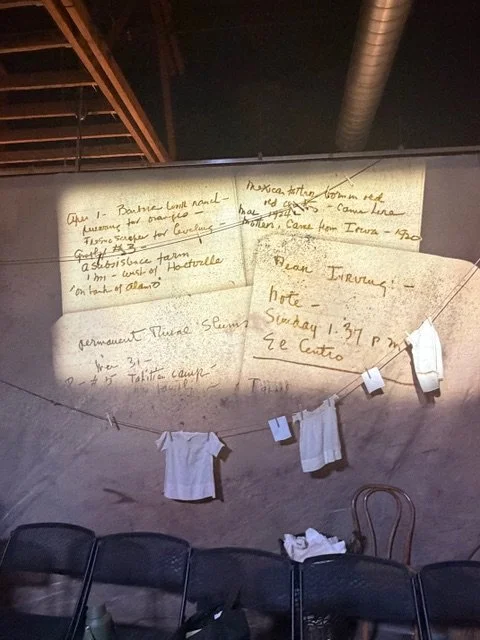
LAST WEST was built with students in mind. From its earliest performances, student matinees and talkbacks have been central — not ancillary — to what the production does.
For universities, colleges, and K–12 schools:
Curriculum connections across disciplines: American history, photography and visual culture, environmental studies, ethnic studies, social justice, creative writing, and theater
A model of documentary and devised theater that speaks directly to students studying performance-making
Free or subsidized student performances available through our community access programming
Post-show talkbacks with playwright Tess Taylor, director Ciera Eis, and creative team members
Connections to West Contra Costa communities (Richmond, El Cerrito) — places Lange photographed and where many Bay Area students have roots
Current university partners: UC Berkeley (English and Journalism departments, Fall 2026 symposium)
People Are Saying
“This ‘NO PROMISED LAND’ is ‘also California,’ a landscape shared by Tess Taylor and Dorothea Lange in successive epochs that are ‘different at the level of atoms,’ but familiar, just the same. Scintillatingly rendered by Taylor as conversation, meditation, road trip, and vivid documentary account, Last West tracks the not-so-distant past into the erupting present, taking on as many forms as there are California topographies, and asking deep-set questions like ‘What does it mean to photograph home?’ and ‘How are you going to get by on just two bucks a day?’”
— FORREST GANDER
"I loved Last West. My grandparents were Dust Bowl survivors in Oklahoma, and I was moved by how much the play resonated with their stories and photographs of that time. It took me to a fabulous place both old and new."
— DEAN RADER
“Her.. pictures are full of the promise of middle-class life (but), Lange’s work often reveals the country’s shadow self, the dark side that doesn’t quite live up to the American dream—not for everyone, at least.
‘There was always this paradox,’ says Poet. ‘Hope and beauty, beauty and its cost, the country settling new folks while moving others out. The country and what it promises, the myth and what it gives. Look at this one.’ The slogan (underscores) the irony of the image. Lange and Poet read the words together: ‘Next time try the train.’”
— ALTA